
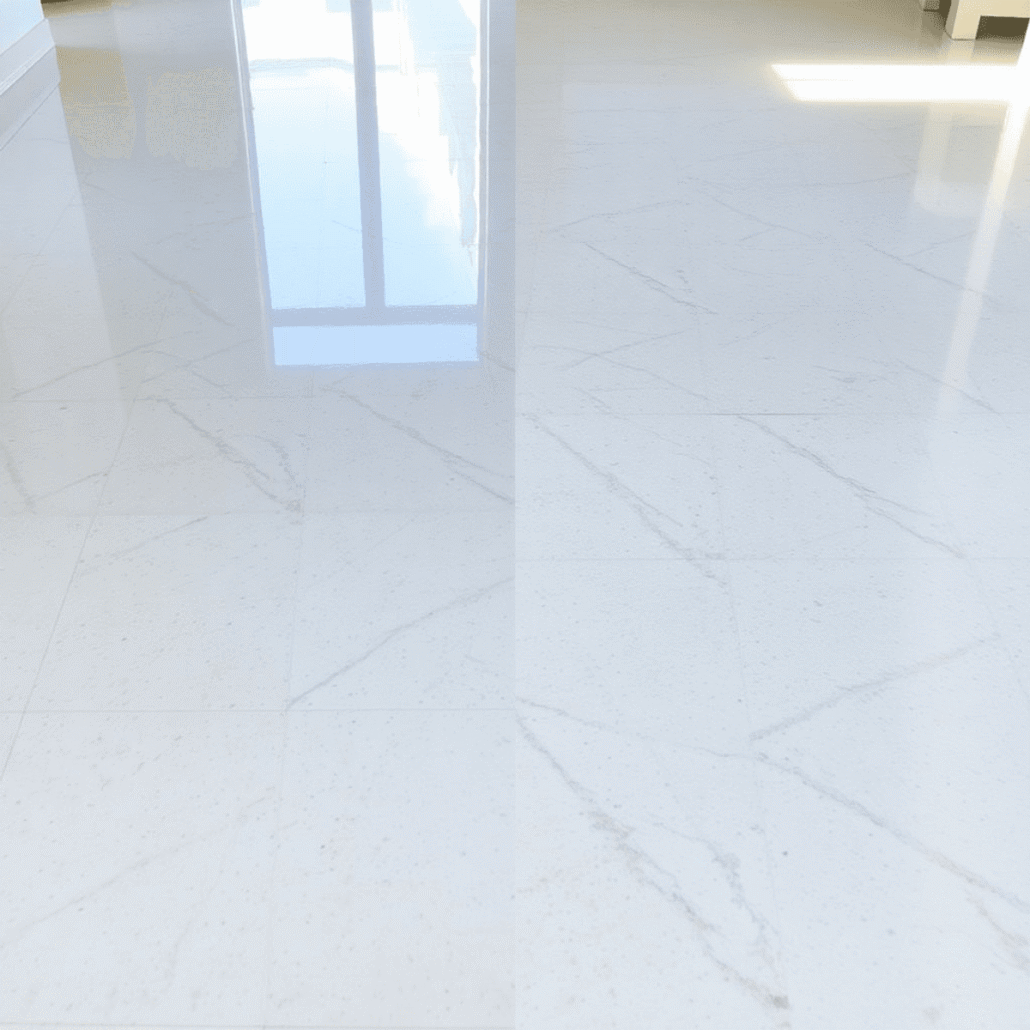
The difference between hard floor cleaning and hard floor restoration
If you have a tiled kitchen, a stone hallway or a marble bathroom, you may find yourself pondering a crucial question:
Do I just need a clean, or do I need a restoration?
This is a valid question. Hard floors are designed to be durable but they still endure daily wear and tear. Dirt accumulates, sealers deteriorate, scratches emerge, and stone can appear dull even when it is technically clean.
At Tile & Stone Medic, we have dedicated over 20 years to cleaning, sealing and restoring tile, stone and other hard surfaces. We frequently encounter the same confusion, particularly with natural stone and period floors like Victorian Minton hallways.
To clarify, hard floor cleaning and hard floor restoration are not interchangeable terms. They address different issues, employ different techniques and yield different outcomes.
What do we mean by hard floor cleaning?
Hard floor cleaning focuses on eliminating surface soiling and ingrained dirt. It’s primarily concerned with hygiene, appearance and ongoing maintenance.
In most residential and many commercial environments, a professional clean is the ideal starting point. It addresses the build-up that regular mopping simply cannot remove, especially in grout lines, textured tiles and porous stone.
What professional hard floor cleaning typically includes
A comprehensive hard floor clean generally involves:
- Assessing the floor type and its condition
- Selecting safe, floor-specific cleaning solutions
- Conducting a deep clean using commercial grade equipment
- Agitating the surface and grout to dislodge embedded dirt
- Rinsing and extracting residues to prevent quick re-soiling
Depending on the nature of the floor, we might also suggest re-sealing post-cleaning. While cleaning eliminates contamination, sealing helps prevent it from returning immediately.
For those interested in transforming their spaces for special occasions like weddings or events, our hard floor deep cleaning restoration service can be invaluable.
We understand that certain cleaning products can damage hard floors, which is why we always use floor-specific solutions during our professional services.
Whether you’re located in Birmingham and in need of stone floor cleaning and restoration, or you’re in Dorset seeking similar services (stone floor cleaning and restoration), or even if you require marble floor cleaning restoration anywhere nationwide – we’ve got you covered!
What cleaning is best for
Cleaning is usually ideal when:
- The floor looks dirty or tired but is not damaged
- Grout has darkened with grease or tracked-in soil
- The surface has lost some sparkle due to grime
- The floor is generally in good condition and you want it maintained
- You are preparing the floor for sealing
If your floor has not been professionally cleaned for a while, the difference can be dramatic. It can genuinely look like a different floor once the soil is removed properly.
But cleaning has limits. And this is where restoration comes in.
What do we mean by hard floor restoration?
Hard floor restoration is a corrective service. It goes beyond dirt removal and deals with the actual condition of the surface.
Restoration is what you choose when the floor is damaged, worn, etched, scratched, dulled, uneven, heavily stained or has failing coatings. Tile and Stone Medic specialises in such services.
In other words, restoration is about bringing the floor back to its former glory by improving the surface itself, not just cleaning what is on top of it.
What restoration may include
Restoration is not one single process. It depends on the material and the problem. It can involve:
- Stripping old sealers, waxes or topical coatings that have discoloured or trapped dirt
- Deep cleaning as a preparation stage
- Honing to remove scratches, lippage and wear patterns
- Grinding for more severe damage or uneven stone
- Polishing to restore clarity and shine, especially on marble and limestone
- Re-grouting or grout repair in problem areas
- Stain treatment for oil, rust, tannin or other deep staining
- Sealing with the right product for the environment and finish
With natural stone, restoration is often transformational because stone responds so well to professional resurfacing. For instance, marble that looks permanently dull can often be brought back to a crisp, reflective finish. Travertine can be refreshed and protected. Slate can be cleaned and re-sealed to restore depth of colour.
Whether you’re in Birmingham, Manchester or Dorset, Tile and Stone Medic offers specialised marble floor cleaning and restoration services tailored to your needs.
What restoration is best for
Restoration is usually needed when:
- The floor is clean but still looks dull or patchy
- You can see scratching, etching or heavy wear
- The stone has lost its polish and feels rougher underfoot
- Grout is breaking down or missing
- Old sealers or coatings have gone sticky, blotchy or yellowed
- Stains have penetrated below the surface
- The floor is a feature and you want it to look its best again
If your floor has “character” but not the good kind, restoration is often the right answer.
The key differences at a glance
If you want a simple way to think about it, try this.
Cleaning improves what is on the floor. For instance, tiled floor cleaning can help remove surface dirt and grime.
Restoration improves the floor itself. This could involve kitchen floor cleaning and restoration for heavily worn areas, or stone floor cleaning restoration for surfaces that have lost their shine.
Here are the practical differences:
- Goal: cleaning removes soil, restoration repairs wear and damage
- Methods: cleaning uses chemical and mechanical deep cleaning (like tiled floor cleaning), restoration may involve abrasion, resurfacing and refinishing
- Results: cleaning makes a floor look fresher, restoration can make it look renewed
- Frequency: cleaning is regular maintenance, restoration is occasional corrective work
- Time and cost: restoration usually takes longer and costs more because it is more labour intensive and technical
Why some floors never look right after “just a clean”
Have you ever cleaned a stone floor repeatedly and it still looks tired? That is usually because one of these issues is present:
The sealer has failed
Sealants are not permanent. Over time they wear away. When they fail, soils enter the pores of the stone or grout more easily. The floor then darkens, marks more quickly and becomes harder to maintain.
Cleaning can help, but if the floor is unprotected it will re-soil fast. In many cases, cleaning plus re-sealing is the missing piece.
The finish has been worn away
Polished marble is a good example. The polish is not a product applied on top. It is the result of the stone being refined to a high sheen. Foot traffic, grit and harsh cleaning products can dull that finish.
A deep clean cannot bring back a true polish if the stone surface is physically worn. Honing and polishing can.
There is etching, not dirt
Etching on marble and limestone is a chemical reaction, often caused by acidic spills. It leaves pale marks or dull patches. Many people think these are stains.
They are not. They are damage to the surface.
Cleaning will not remove etching. Restoration will.
There are old coatings trapping grime
Some floors have layers of wax or topical sealers that have built up over time. They can look patchy, attract dirt and make the floor harder to clean.
In these cases, the right solution is often to strip the old coating and start again with an appropriate finish.
Tile and grout: cleaning vs restoration
With ceramic and porcelain tiles, the tile itself is often resilient. The grout is usually the weak point.
When tile and grout cleaning is enough
Cleaning is normally suitable if:
- Grout is discoloured but intact
- The tiles have a film of grease or soil, common in kitchens
- The floor has not been deep cleaned in years
- You want to improve appearance and hygiene quickly
Professional equipment matters here. The right agitation and extraction makes a bigger difference than most people expect.
When tile and grout restoration is needed
Restoration may be needed if:
- Grout is crumbling, missing or permanently stained
- The floor has uneven wear, loose tiles or damaged sections
- There are stubborn issues under old sealers or coatings
- You want a full refresh and long-term protection, not a short-term improvement
Sometimes restoration includes targeted re-grouting or repairs, followed by sealing to stabilise the grout and keep it looking cleaner for longer.
Natural stone: cleaning vs restoration
Natural stone is where the difference becomes most obvious. Stone is beautiful but it is also sensitive to the wrong products and the wrong methods.
Stone floor cleaning
Stone cleaning focuses on safe deep cleaning using stone appropriate solutions. The aim is to remove soiling without damaging the stone. For many floors, we then recommend sealing to reduce future staining and simplify maintenance.
This is often perfect for sandstone, slate, limestone and travertine, that has dulled due to dirt. It also applies to hallways and kitchens where traffic has pushed soil into pores or floors that look darker or patchy because the sealer has worn away. In such cases, our specialised tiled floor cleaning restoration services could be the solution you need. We also offer similar services in Staffordshire as well as Birmingham specifically for travertine floors.
Stone floor restoration
Stone restoration comes into play when the surface needs refining.
This is common with:
- Marble polishing and marble restoration
- Limestone with etched areas and wear paths
- Stone floors with scratches, lippage or uneven tiles
- Period floors where you want to preserve the material but improve the finish
Restoration is also the route we take when a floor has been previously treated incorrectly and needs expert correction.
What about Victorian Minton tile hallways?
Minton floors are a classic example of why specialist knowledge matters.
They are often in entrance hallways, so they take a lot of grit and moisture. Over the years, they are frequently covered with layers of wax or sealers that have darkened. The pattern can look muted. The surface can look blotchy.
In many cases, the best approach is not just a clean. It is careful restoration.
That can include stripping old coatings safely, deep cleaning, neutralising residues, then applying a suitable sealer and finish to enhance the original design while protecting it for the future.
If you have a Minton hallway, you already know it is a feature worth keeping. The right service protects that value.
How do we decide which service you need?
We always start with the same thing. We assess the floor.
We look at the material, the existing finish, the level of soiling and the type of wear. We ask questions too. How is it used? What products have been applied? What result are you hoping for?
Because the real question is not “cleaning or restoration?”
It is “what problem are we trying to solve?”
If the issue is soil, we clean.
If the issue is wear, damage or a failed finish, we restore.
And if it is both, which is common, we plan a process that gives you a result that lasts.
Why professional equipment and products make such a difference
Many people do everything right at home and still struggle. That is not a failure on your part. Hard floors need the right tools.
Professional grade machines deliver controlled pressure, heat and agitation. Professional extraction removes the slurry and residues that cause rapid re-soiling. Specialist products are chosen for the floor type so the surface is cleaned effectively without damage.
This matters even more with natural stone and marble, where the wrong cleaner can cause dulling or etching. For instance, using an inappropriate method to clean a marble floor can lead to irreversible damage.
We keep up with new technologies and best practice because it is the only way to deliver consistent results across domestic floorcare and commercial cleaning environments.
What result should you expect?
A professional clean should leave the floor noticeably fresher, cleaner and more uniform, with grout lines improved and residues removed.
A restoration should leave the floor renewed, with clarity, improved texture, a better finish and the right level of protection.
Both services are valuable. They just do different jobs.
Next step: want us to take a look?
If your floor looks tired and you are not sure whether it needs cleaning, sealing or full restoration, we can help you get a clear answer.
At Tile & Stone Medic, we clean and restore tile, stone, marble and other hard surfaces, with specialist options for feature floors like Victorian Minton hallways. We focus on practical solutions and long term results. You want it to look right again. We want that too.
So, what are you seeing on your floor right now? Dirt and grime from a poorly maintained quarry tile floor, or signs of wear and damage on a travertine floor? Once we know that, the right path becomes much easier to choose.
FAQs (Frequently Asked Questions)
What is the difference between hard floor cleaning and hard floor restoration?
Hard floor cleaning focuses on removing surface dirt, grime and ingrained soil to improve hygiene and appearance, using floor-specific solutions and commercial equipment. Hard floor restoration goes beyond cleaning to repair damage such as scratches, etching, dullness, worn coatings or stains by processes like stripping old sealers, honing, grinding, polishing, re-grouting and sealing.
When should I choose professional hard floor cleaning for my tiled or stone floors?
Professional hard floor cleaning is ideal when your floors look dirty or tired but are not damaged. It effectively removes build-up that regular mopping can’t, especially in grout lines and porous stone. Cleaning is recommended if grout has darkened with grease or soil, the surface has lost sparkle due to grime, or you want to maintain a generally good condition floor or prepare it for sealing.
What does a comprehensive professional hard floor clean typically include?
A thorough professional clean involves assessing the floor type and condition, selecting safe and appropriate cleaning solutions, deep cleaning with commercial grade equipment, agitating surfaces and grout to dislodge embedded dirt, rinsing and extracting residues to prevent quick re-soiling. Re-sealing may also be suggested post-cleaning to protect the surface.
When is hard floor restoration necessary for natural stone or tiled floors?
Restoration is necessary when the floor appears clean but still looks dull, patchy or scratched; shows signs of etching or heavy wear; has lost its polish; feels rough underfoot; grout is breaking down; old sealers have become sticky or yellowed; stains have penetrated below the surface; or the floor has unevenness or damage requiring corrective treatment.
What processes are involved in hard floor restoration services?
Restoration may involve stripping old sealers or coatings that have discoloured or trapped dirt, deep cleaning as preparation, honing to remove scratches and wear patterns, grinding for severe damage or unevenness, polishing to restore shine especially on marble and limestone, re-grouting repairs, stain treatment for deep stains like oil or rust, and applying suitable sealers for protection.
Can Tile & Stone Medic help with stone floor cleaning and restoration across different locations in the UK?
Yes. Tile & Stone Medic offers specialised tile and stone cleaning, sealing and restoration services nationwide including Birmingham, Dorset, Manchester and other areas. They use floor-specific products to avoid damage and provide tailored solutions for various materials such as marble, travertine and slate to restore floors to their former glory.