
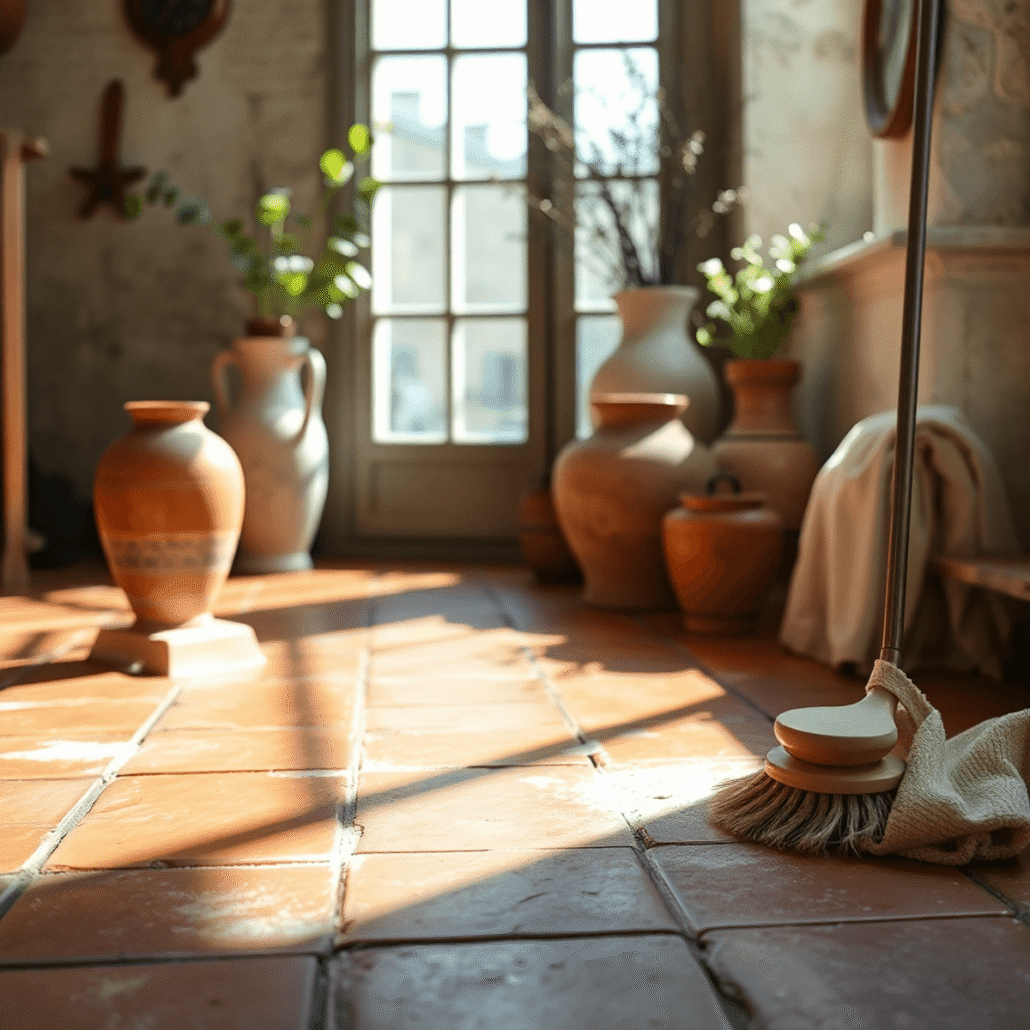
How to restore a neglected terracotta floor
Terracotta floors have this warm, earthy look that’s hard to fake. The colour variation, the little imperfections, the way the light catches the surface. Lovely.
But neglected terracotta. That’s a different story. It can go dull, patchy, powdery at the edges, stained around doorways, and weirdly sticky in spots where old sealers or polishes have built up. Sometimes it looks like it’s permanently dirty even after you’ve mopped it three times.
The good news is you can usually bring it back. Properly back. It just needs the right approach, and a bit of patience because terracotta is porous and it remembers everything you’ve ever spilled on it.
This guide walks you through a realistic, step-by-step restoration of your terracotta tile floor. I’ll be honest about where DIY tends to go wrong, and when it’s smarter to call in a specialist like Tile & Stone Medic (especially if you want the “former glory” result, not the “it’s slightly better” result).
First, what makes terracotta tricky?
Terracotta is basically fired clay. It’s softer and more absorbent than many other floor types, and it often has:
- High porosity (so moisture and stains sink in)
- Old sealers that break down unevenly
- Salt deposits or moisture issues if the subfloor is damp
- Surface erosion where grit and traffic have worn it down
And here’s the big one. Many terracotta floors have been “looked after” with the wrong products for years. Household cleaners, shiny acrylic polishes, mop and glo type stuff, even waxes that trap dirt. So restoring it is often less about cleaning dirt, more about removing layers of old product.
For those who find themselves overwhelmed with their neglected terracotta flooring, remember that Tile & Stone Medic is just a call away. They specialise in tiled floor cleaning and restoration across Staffordshire and beyond. Whether it’s preparing your venue for an event or simply maintaining your home’s aesthetic appeal with a deep clean or restoration service, their expertise ensures your hard floors are always in top shape.
What you’ll need (the realistic list)
You don’t need a garage full of gear, but you do need the right basics.
For inspection and prep
- A torch (to see patchy sealer and residue)
- Masking tape and plastic sheeting (to protect skirtings and adjacent floors)
- A stiff brush and dustpan
- Wet vac (helpful, not essential, but it makes life easier)
For cleaning and stripping
- A pH neutral cleaner (for general deep cleaning)
- A terrazzo and terracotta safe alkaline cleaner or stripper for old coatings (choose carefully, more on this below)
- Soft scrubbing pads, nylon brush, or a rotary scrubber if you can hire one
When it comes to cleaning terracotta floors, it’s essential to use the right products. Whether you’re dealing with a terracotta floor in Penkridge or in Droitwich, understanding the specific needs of these surfaces will save you time and effort.
For repairs and finishing
- Grout repair mortar if joints are failing
- Appropriate impregnating sealer and or surface sealer depending on finish you want
- Microfibre mops and clean buckets (plural, because dirty water is the enemy)
If you’re unsure what’s currently on the floor, don’t just guess and throw a strong stripper at it. That’s how people end up with etched tiles, softened surfaces, and a floor that looks worse but now also feels rough.
Step 1: Work out what you’re dealing with
Before you touch a chemical, do a quick assessment. It saves you hours.
Check for these common issues
1. Patchy shine Usually means old topical sealer or polish is still present in places.
2. Dark staining around edges or doorways Could be ingrained dirt, oils, or moisture migration.
3. White powdery residue (efflorescence) Often salts being carried up by moisture. Cleaning it is one thing, stopping it coming back is another.
4. Loose, sandy grout Very common in older terracotta. If the grout is crumbling, no sealer will “fix” it. It needs repair.
5. Tiles that look dusty even when clean That can be surface erosion, or the sealer has failed and the tile is now acting like a sponge.
In such cases of severe damage or wear, professional help might be necessary. For instance, if you’re struggling with a terracotta kitchen floor in Redditch or needing assistance with cleaning and sealing a terracotta kitchen floor in Tarporley.
Do a small water test
Drop a few teaspoons of water on different areas.
- If it darkens immediately, the floor is unsealed or the sealer has failed.
- If it beads, there’s still a sealer present.
- If it half beads then slowly darkens, you’ve got patchy protection and likely residue.
Do this test before and after each major stage. It tells you what’s changing.
Step 2: Dry clean properly (yes, it matters)
This part feels boring but it’s crucial.
Vacuum slowly with a soft floor head, or sweep thoroughly. Grit is what scratches terracotta during scrubbing, especially if you’re using pads or a machine. For more detailed advice on cleaning terracotta floors, check out this guide.
Pay attention to:
- Thresholds
- Kitchen areas
- Near external doors
If there’s a lot of debris in grout lines, use a dry stiff brush first.
Step 3: Deep clean with a pH neutral cleaner
If the floor is just “dirty and dull” and you’re not dealing with thick coatings, start here.
- Mix your pH neutral cleaner as directed.
- Apply generously. Don’t mist it and hope for the best. Terracotta needs dwell time.
- Let it sit for 5 to 10 minutes, keeping it wet.
- Agitate with a nylon brush or pad.
- Remove dirty solution with a wet vac or mop up immediately.
- Rinse with clean water. Then rinse again.
You’re aiming to remove soils without driving them deeper. If your rinse water is still murky after two passes, keep going.
Let the floor dry fully. And I mean fully. Overnight is often sensible.
If you’re also looking for tips on maintaining other types of floors such as tile, stone or terrazzo, you might find these guides, guides and guides helpful respectively.
Step 4: Strip old sealers and coatings (where most restorations happen)
If your terracotta has a sticky feel, patchy gloss, blackened grout lines, or it seems to “hold dirt” no matter what, you’re probably dealing with old sealers, acrylics, waxes, or a mix of everything.
This is the part where DIY can go sideways fast.
Choosing the right stripping approach
- Alkaline stripper is often used for old polishes and topical sealers.
- Solvent-based removers may be required for certain sealers, but they’re harder to handle safely and can cause issues if misused.
- Acid cleaners are generally not your first choice for terracotta restoration. In the wrong hands they can damage surfaces and grout.
If you’re unsure what’s on the floor, do a test patch in an inconspicuous area first. Always.
Stripping process (test patch, then scale)
- Apply stripper solution evenly.
- Allow dwell time as per instructions. Keep it wet.
- Scrub thoroughly. A rotary scrubber makes a big difference, but don’t go aggressive with harsh pads.
- Extract the slurry. Don’t spread it around.
- Rinse, rinse, rinse until the water runs clear and no slick residue remains.
A common mistake is stripping once and thinking it’s done. Old coatings can be layered. You might need two or three passes.
And if the floor goes very matte and “open” looking after stripping, that’s not damage necessarily. That’s often what unsealed terracotta looks like. It can be a bit of a shock.
Dry it completely before making the next decision.
Step 5: Deal with stains (spot treatment, not chaos)
Once the coatings are off, you’ll finally see what’s actually stained versus what was just trapped dirt.
Common terracotta stains:
- Cooking oil and grease
- Tannin from plant pots
- Rust from metal furniture
- General traffic grime
For deep staining you may need a poultice. That’s basically a paste that draws staining out as it dries. It can take multiple rounds. Be patient.
If you’ve got widespread blackening that doesn’t shift, it might be deeper contamination or moisture-related issues. At that point, you’re into specialist territory.
Step 6: Repair grout and edges before sealing
If your grout is missing, cracked, or powdery, fix it now.
- Rake out loose material carefully.
- Vacuum out dust.
- Regrout with a suitable product for your joint width and environment.
Terracotta floors often look “wrong” after restoration because the grout is still a mess. It frames everything. Get it tidy and consistent and the whole floor lifts.
Let grout cure as required. Do not rush into sealing the same day unless the product explicitly allows it.
Step 7: Let the floor dry. Properly dry.
This might be the most unglamorous advice in the whole article, but it’s the difference between a finish that lasts and a finish that fails.
Terracotta holds moisture. If you seal too soon, you trap it.
Signs it’s not dry:
- Tiles look darker in patches
- Edges stay damp looking
- Water test shows weird inconsistent absorption
Good drying conditions:
- Ventilation
- Gentle heat
- Time
In some homes, especially older buildings, drying can take several days after a wet strip and rinse process.
After dealing with stains and repairing grout, it’s crucial to let the floor dry properly. This might be the most unglamorous advice in the whole article, but it’s the difference between a finish that lasts and a finish that fails. Terracotta holds moisture. If you seal too soon, you trap it.
Signs it’s not dry include tiles looking darker in patches, edges staying damp looking, or a water test showing weird inconsistent absorption. For good drying conditions, ensure there is proper ventilation, gentle heat and enough time for drying. In some homes, especially older buildings, drying can take several days after a wet strip and rinse process.
Step 8: Seal it (and choose the finish you actually want)
There are broadly two approaches, and which one is right depends on your expectations.
Option A: Natural, low sheen finish (easier maintenance)
Usually an impregnating sealer that protects within the tile, leaving a more natural look.
Pros:
- More subtle, less “shiny floor”
- Less risk of peeling like some surface coatings
- Easier spot maintenance
Cons:
- Doesn’t give that classic warm, enriched terracotta glow on its own
- Stains can still happen if spills aren’t wiped up quickly
Option B: Enriched colour and a traditional finish (more “wow”)
Often a combination: colour enhancing sealer and or a surface finish depending on the desired sheen.
Pros:
- Richer colour, more depth
- Can look genuinely stunning when done right
Cons:
- More sensitive to application errors
- Can show lap marks, patchiness if uneven
- Some finishes need periodic reapplication
Sealing basics (whatever you choose)
- Apply thin, even coats.
- Follow coverage rates. Overapplying is a classic mistake.
- Work in manageable sections.
- Buff off excess where required. Leaving sealer pooling on terracotta can create sticky patches or shiny blotches.
- Allow proper curing time before foot traffic and especially before washing.
If you want the floor to look consistent across an entire ground floor, this is where a professional team earns their keep. The products matter, sure. But the technique matters more.
Step 9: The first clean after sealing (do not ruin it on day one)
Once sealed and cured, keep cleaning gently.
- Use a pH neutral cleaner.
- Avoid vinegar, bleach, harsh degreasers, and anything “all purpose” unless it’s specifically safe for sealed terracotta.
- Use microfibre cloths and change the water often.
And one more thing. Doormats. Good ones. A terracotta floor’s biggest enemy is gritty soil dragged in daily.
When it’s smarter to bring in a professional
Some terracotta floors respond brilliantly to DIY cleaning and resealing. Others fight you the whole way.
You’ll probably want specialist help if:
- The floor has heavy, unknown coatings and patchy shine that won’t strip evenly
- There’s widespread staining that has penetrated deeply
- Efflorescence keeps returning, suggesting moisture issues
- You’re restoring a larger area and want a consistent finish throughout
- The tiles are fragile, historic, or part of a period property where mistakes are expensive
Companies like Tile & Stone Medic do this day in, day out. They specialise in cleaning, sealing, and restoration of tile and natural stone floors. This includes more specialist work like Victorian Minton hallways. With over 20 years in the industry and access to proper equipment and newer restoration technologies, they can usually get results that are hard to replicate with a hired machine and a hopeful weekend.
For instance, if you’re facing challenges with your terracotta tiled floor in Wellesbourne or Warwickshire, their terracotta tiled floor cleaning and sealing service could be the solution you need. Similarly, for those struggling with terracotta kitchen floors in Epsom Surrey, their specialised cleaning service could make a significant difference.
And honestly, sometimes the biggest benefit is speed. A process that takes a homeowner several weekends of trial and error can often be handled efficiently by an experienced team with the right products for that specific floor. For example, their terracotta floor cleaning, sealing and polishing service in Poulton-le-Fylde or Blackpool shows how effective their services can be.
A simple maintenance routine (so you don’t end up back here)
Once the floor looks good again, keep it that way with a boring, dependable routine.
- Vacuum or sweep 2 to 3 times a week in high traffic areas
- Damp mop with pH neutral cleaner weekly (or as needed)
- Wipe spills quickly, especially oils and acidic foods
- Avoid steam mops on sealed terracotta unless you know your sealer system can tolerate it
- Reassess sealer performance yearly with the water test
If water stops beading (for sealed floors), or darkens instantly (for natural finish), it’s usually time to top up protection before stains return.
Final thought
Restoring a neglected terracotta floor is not just one clean. It’s a sequence. Remove the dry grit, deep clean, strip what shouldn’t be there, let it dry properly, then seal with the finish you actually want to live with.
Do it patiently and the floor comes back warm and soft looking, like it always should have been. And if it’s a bigger or more complicated job, getting a professional restoration from a specialist like Tile & Stone Medic can be the difference between “improved” and genuinely restored. They offer expert services across various regions including Birmingham, Lancashire, Cheshire, and Worcestershire. If you’re in need of tiled floor cleaning and restoration, their team is ready to assist you.
FAQs (Frequently Asked Questions)
What makes terracotta flooring tricky to maintain and restore?
Terracotta is fired clay, which makes it softer and more absorbent than many other floor types. It has high porosity, meaning moisture and stains sink in easily. Additionally, old sealers can break down unevenly, salt deposits or moisture issues may arise if the subfloor is damp, and surface erosion can occur from grit and traffic wear. Many terracotta floors have also been treated with incorrect products over time, complicating restoration.
Why does neglected terracotta flooring often look permanently dirty even after cleaning?
Neglected terracotta can develop dullness, patchiness, powdery residues at edges, stains around doorways, and sticky spots caused by old sealer or polish build-up. These layers trap dirt and moisture due to the floor’s porosity. Simply mopping multiple times usually doesn’t remove these issues because the floor remembers all spills and past treatments.
What basic tools and products do I need for restoring a terracotta tile floor?
You’ll need inspection tools like a torch to spot sealer residue, masking tape and plastic sheeting to protect adjacent areas, a stiff brush and dustpan, and optionally a wet vac. For cleaning and stripping old coatings, use a pH neutral cleaner for deep cleaning and a terracotta-safe alkaline cleaner or stripper. Soft scrubbing pads or nylon brushes help with scrubbing. For repairs and finishing, grout repair mortar may be needed along with impregnating or surface sealers depending on your desired finish.
How should I assess my terracotta floor before starting restoration work?
Begin with a thorough inspection checking for patchy shine indicating old sealer presence; dark stains around edges or doorways from ingrained dirt or moisture; white powdery residue (efflorescence) caused by salts; loose or sandy grout needing repair; and tiles that appear dusty even when clean which may indicate surface erosion or failed sealer. Understanding these issues helps you choose the right restoration approach.
Why is it important not to guess when choosing cleaning products for terracotta floors?
Using the wrong harsh chemicals or strong strippers without knowing what’s currently on your terracotta floor can cause damage such as etched tiles, softened surfaces, rough textures, or worsened appearance. Terracotta requires specific cleaners safe for its porous nature to avoid permanent harm during restoration.
When should I consider calling a specialist like Tile & Stone Medic for my terracotta floor restoration?
If your terracotta flooring shows severe damage such as extensive surface erosion, stubborn staining, crumbling grout joints, or if DIY attempts have not achieved the desired ‘former glory’ look but only slight improvement, it’s smarter to enlist professional help. Specialists have expertise in tiled floor cleaning and restoration across Staffordshire and beyond to ensure thorough deep cleaning, proper repairs, sealing and polishing tailored to your floor’s needs.